Introduction
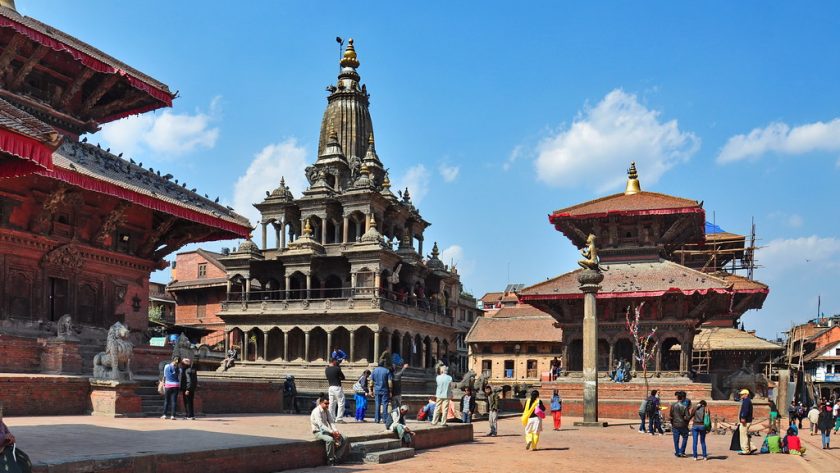
The Malla Kings of Lalitpur (also known as Yala) ruled the independent Kingdom of Lalitpur in the Kathmandu Valley. This era was celebrated for extraordinary temple architecture and the development of rich Newar culture.From the 15th to the 18th century, the Kathmandu Valley was split into three rival kingdoms: Kathmandu, Bhaktapur, and Lalitpur. While they frequently quarreled and fought, their intense rivalry sparked an incredible golden age of art, culture, and architecture. The Malla kings of Lalitpur, in particular, earned a legendary reputation as master builders and passionate patrons of the arts. The crown jewel of their legacy is Patan Durbar Square. The Malla kings transformed this central square into a breathtaking display of Newari architecture. They perfected the multi-tiered pagoda style, using rich red bricks and dark, intricately carved wooden windows.
History of Lalitpur

The history of Durbar Square remains unclear. Although the Malla Kings of Lalitpur established the royal square, historians know that the site began as an ancient crossroad. The Pradhanas, who settled around the site before the Mallas, have deep connections to the area. Some chronicles hint that Thakuri dynasty built a palace, scholars have found little evidence to prove this. Still, experts are certain that Patan thrived as a prosperous city since ancient times. Historical evidence even suggests that the Kirat dynasty founded Patan during the 3rd century BC. Rulers expanded the city in the sixth century.
List of Malla Kings of Lalitpur
1.Siddhi Narasimha Malla (1620–1661)
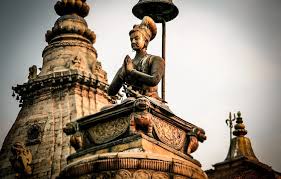
King Siddhi Narsingh Malla was an extraordinary ruler who transformed Patan into a magnificent center of art, culture. His most famous achievement is the architectural transformation of Patan Durbar Square. Highlighted by the construction of the stunning, multi-tiered stone Krishna Mandir in 1637, which remains a masterpiece of Newar architecture. Beyond building temples and expansion projects on the royal palace, he was a deeply religious king. He institutionalized cultural traditions, establishing sacred dances like the Kartik Naach to educate and entertain his subjects. The king was widely celebrated for his fairness. He ruled his people with a rare blend of spiritual devotion and practical wisdom. Utimately abdicating the throne later in life to pursue a path of religious ascetism. Later leaving behind a peaceful and culturally enriched kingdom.
2.Srinivasa Malla (1661–1685)
King Srinivasa Malla was a master diplomat, skilled military strategist. He took the throne after his father's abdication. The new king quickly proved his political acumen by skillfully navigating intense rivalries between Kathmandu and Bhaktapur. He often acted as the supreme mediator of the Kathmandu Valley to maintain a strategic balance of power.
Economically, he built upon his father’s foundations by further securing trade routes with Tibet. Patan’s treasury and funded an explosion of cultural and religious architectureis credided to him. He heavily renovated and expanded the Patan Royal Palace, building beautiful courtyards like the Sundari Chok and Degutale Temple. While he greatly advanced the valley's gold and bronze metal casting industries. He deeply invested in the cultural identity of his people. Srinivasa Malla also institutionalized and expanded the iconic Kartik Naach dance festival. Adding several new plays and expanding its duration to a full month for Patan. So, it became an unrivaled center of living heritage, theater, and economic prosperity.
3.Yoga Narendra Malla (1685–1705)
King Yoganarendra Malla was a passionate patron of music, literature, and high culture. He proudly styled himself as “Gandharva Vidya Gurudev,” meaning Master of the Science of Music. This cultured ruler built beautiful monuments like the Mani Mandap pavilions at the palace entrance. He also heavily promoted trade and financial stability within the valley.
Unlike his ancestors, Yoganarendra pursued an aggressive political strategy. He frequently entangled Patan in complex military standoffs. He shifted alliances with Kathmandu and Bhaktapur to defend his borders. His combative foreign policy ultimately caused his downfall. He pulled Patan into constant, volatile skirmishes and blockades. Tragically, political adversaries secretly poisoned him in 1705. This happened while he was away on a campaign against Bhaktapur. The poisoning brought his reign and life to an abrupt end at age 38.
4.Loka Prakash Malla (1705–1706)
King Loka Prakash Malla had an exceptionally brief reign of only a few months. Because he was a young child, he could not execute major administrative reforms. He never led military campaigns or commissioned grand architectural monuments. Because of this, no portrait of him exists today.
His primary function as king was symbolic. He served as a vital figurehead to preserve Patan's legitimate royal bloodline. This happened during a chaotic political crisis following his grandfather's sudden death.
His powerful mother, Princess Yogamati, served as his active regent. During his few months on the throne, state work focused entirely on palace survival. The administration worked to keep greedy local noble factions at bay. They also maintained basic economic stability.
His most lasting act of statecraft was minting his official silver mohar coins. This crucial royal tradition asserted Patan’s continued sovereignty. It also maintained financial independence during a time of immense political vulnerability.
5. Indra Malla (1706–1709)
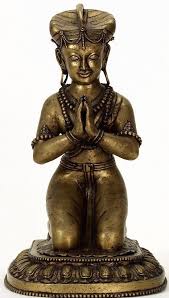
King Indra Malla ruled Patan from 1706 until his death in 1709. He also went by the name Jaya Indra Malla. His work centered heavily on navigating intense political instability. This chaos followed the post-Yoganarendra Malla succession crisis. His powerful aunt, Princess Yogamati, placed him on the throne. This happened after the child-king Loka Prakash died suddenly. Therefore, Indra Malla spent much of his focus maintaining royal authority. He constantly fought to defend the legitimate bloodline against ambitious local feudal lords.
Despite his brief three-year reign, Indra Malla made a unique mark on Nepalese history. He became the only Malla king of Patan to strike a coin denomination in gold. He minted highly distinct currency. These gold coins featured traditional Newar iconography like a ceremonial sword, garland, and trident. People also recognized him as a deeply religious monarch. He worked hard to stabilize the fracturing state. To do this, he issued generous grants and funded temple religious trusts. Alongside his queen, Bhagyavati, he dedicated sacred objects to palace shrines. Through these actions, he protected Patan's artistic and religious continuity during a highly vulnerable era.
6. Vira Narasimha Malla(1709)
King Vira Narsimha Malla briefly seized the throne of Patan in 1709 CE. This happened following Indra Malla's death. Today, no physical portraits, paintings, or statues of him survive. His reign was incredibly brief. It lasted only a matter of months. A brutal political tug-of-war caught the kingdom during this time. The conflict raged between the powerful kingmaker, Princess Yogamati, and ambitious local nobles. These local lords were known as the Pradhanas.
The Pradhana factions installed Vira Narsimha Malla in direct defiance of Yogamati. However, she quickly ousted him. She reasserted her absolute control later that same year. Because his reign collapsed so fast, he left almost no physical mark on history. His only remaining legacy is his official silver Mohar coinage. He minted these coins simply to validate his brief stint on the throne.
7.Vira Mahindra Malla (1709–1715)
Vira Mahindra Malla was an illegitimate son of King Yoganarendra Malla. Before his birth, a fierce palace faction drove his mother out of the capital. King Indra Malla led this opposing group. His mother, Rajeswaridevi, fled to the neighboring region of Tanahun. Mahindra was born there and spent his early childhood. Following Indra Malla's death in 1709, a fierce political struggle erupted in Patan. The conflict raged between Princess Yogamati and Rajeswaridevi.
Yogamati briefly placed Vira Narsimha Malla on the throne. However, a rival faction quickly sidelined her group. They installed young Vira Mahindra Malla as king that same year. King Prithvipati Shah of Gorkha even supported this move. King Vira Mahindra Malla’s six-year reign provided Patan with much-needed stability. This followed a chaotic era of three different rulers in four years. Because he ascended at a young age, his mother wielded actual executive authority. Rajeswaridevi masterfully ran the state, effectively reducing Yogamati's influence.
During his reign, the government focused on consolidating royal power against fractious local lords. They also preserved vital trade routes. Additionally, they ensured regional stability through alliances with neighboring kingdoms. His administration maintained economic traditions by striking official silver Mohar coins. These coins featured a sacred trident surrounded by geometric Newar script.
8.Riddhi Narshimha Malla (1715-1717)
Riddhi Narasimha Malla ruled for a short two-year period from 1715 to 1717. His reign was a focused, urgent effort. He worked hard to maintain Patan's political sovereignty and deep religious traditions. This came during a time of extreme vulnerability for the royal family. Riddhi Narasimha successfully asserted Patan's economic independence. He did this by striking highly intricate silver Mohar coins in 1715. These coins featured a symbolic royal lion to project state strength.
He was deeply pious. His primary work centered on stabilizing the kingdom through religious diplomacy. He issued numerous land grants. He also established enduring guthis to handle temple maintenance. Furthermore, he famously joined Yogamati in dedicating a magnificent gold-leaf plate. They gave this inscribed piece to the sacred Changu Narayan temple complex. This act helped solidify his divine right to rule.
His sudden death in 1717 without a male heir marked a massive historical turning point. It ended the direct, unbroken lineage of Patan's legendary founding king, Siddhi Narsimha Malla. This tragedy left the kingdom's future entirely in the hands of the palace nobility.
9.Mahendra Simha Malla (1717–1722)
Mahindra Simha Malla holds a unique position in Nepalese history. He also went by the name Bhaskara Malla. He united two major rival kingdoms under a single crown. This occurred during an era of immense political friction.He succeeded his father in 1700 as the King of Kantipur. At the time, he was just four years old. He ruled there under his birth name, Bhaskara Malla.
Later, King Riddhi Narasimha Malla of Patan died in 1717. The neighboring kingdom was completely without a direct, legitimate male heir. The influential princess-kingmaker Yogamati intervened to stabilize the valley. She pushed past local noble factions. Then, she proclaimed Bhaskara Malla as the King of Patan. He ruled Patan under the throne name Mahindra Simha Malla until 1722. He once captured a wild herd during an expedition to the southern Terai. After this, he proudly assumed a grand new title. He called himself Gajapati, meaning Lord of the Elephants. This grand title highlighted his power before he asserted his dual sovereignty by striking distinct silver Mohar coins. He minted these pieces under his new throne name.
10.Yoga Prakash Malla (1722–1729)
King Yoga Prakash Malla ascended the throne of Patan in 1722. He was also known as Yoga Prakasha. This followed the death of Mahindra Simha Malla. His ascension successfully restored a localized Newar lineage. It ended a brief period of dual rule with Kathmandu. During his seven-year reign, his administration focused on economic restoration and religious diplomacy. He immediately re-asserted the kingdom's financial independence. He did this by striking elegant silver Mohar coins in 1722. This matched the Nepal Sambat year 842. The coins featured a central script. A sacred eight-petaled lotus framed this script. The design was dedicated to the patron goddess Karunamaya.
He was deeply pious and committed to cultural preservation. Yoga Prakash Malla dedicated much of his executive effort to funding religious trusts. These trusts were known as guthis. He also renovated local temples. Additionally, he issued crucial land grants to the Buddhist and Hindu priesthoods. These actions helped ensure social stability. His stable and peaceful reign concluded with his death in 1729. This paved the way for his successor, Vishnu Malla. The new king would continue the delicate balancing act. He had to protect Patan's sovereignty in a rapidly fracturing valley.
11.Vishnu Malla (1729–1745)
King Vishnu Malla ascended the throne of Patan in 1729 as an adopted heir. The court nobility and the legendary kingmaker, Princess Yogamati, chose him. They selected him from a collateral royal line to guarantee an orderly succession. To protect Patan's economic interests, he standardized the weight and silver purity of the state currency. He struck elegant Mohar coins. These coins featured a distinct central rectangular frame enclosing his royal name.
He was a passionate patron of Newar craftsmanship. His crowning architectural achievement was the comprehensive renovation of the Patan Royal Palace complex. Within the palace, he constructed the magnificent, multi-tiered Keshab Narayan Chok. Today, this beautiful courtyard forms the heart of the Patan Museum. He also installed massive, ceremonial bronze bells. He is recognized the existential threat posed by the rising Gorkha Kingdom. Therefore, Vishnu Malla cleverly forged a strategic military alliance with King Ranjit Malla of Bhaktapur. This alliance kept Patan secure and prosperous until his death in 1745. His passing left the kingdom to his adopted successor, Rajya Prakash Malla.
12.Rajya Prakash Malla (1745–1765)
King Rajya Prakash Malla’s reign from 1745 to 1758 was a deeply fraught period. It was an exercise in defensive diplomacy and political survival. He faced intense internal betrayal from his own court. He visually declared his sovereignty by minting traditional silver Mohar coins. These coins were stamped with his name. Despite debilitating political constraints, Rajya Prakash remained a dedicated custodian of Patan's cultural legacy. He heavily financed local religious trusts. He also protected the sacred festivals of Lalitpur. Tragically, Gorkhali forces tightened their economic stranglehold around the valley. As this happened, the court noble factions grew increasingly hostile. The Pradhanas eventually betrayed Rajya Prakash. They blinded him in a brutal coup. This violence directly led to his death in 1758. His passing plunged Patan into a chaotic succession crisis. This occurred just a decade before the final collapse of the Malla dynasty.
13.Dal Mardan Shah (1765)
King Dal Mardan Shah ruled Patan from 1764 to 1765. During the messy, final decade of the Malla dynasty, Patan’s local ministers revolted against their own king. These notoriously treacherous ministers were known as the Pradhanas. Their rebellion threw Patan into a massive leadership vacuum. The ministers then made a bizarre political gamble. They wanted to appease the encroaching Gorkhali army. At the same time, they wanted to maintain Patan's separate identity. Therefore, they invited Dal Mardan Shah to cross enemy lines. They offered him the crown of Patan. This made him the only Shah dynasty prince to legally rule a Malla kingdom before the final conquest.King Dal Mardan Shah’s highly unusual one-year reign was a desperate, high-stakes geopolitical experiment. Patan’s powerful nobility engineered it to stave off a total Gorkhali military invasion.
Placing him on the throne, the Pradhanas hoped to lift crippling economic blockades. These blockades were strangling the entire Kathmandu Valley Dal Mardan Shah legally certified his administrative takeover. He did this by striking distinct silver Mohar coins. These coins were stamped with his own name and Shah lineage.However, his work as a bridge between two warring worlds quickly collapsed. He fiercely refused to act as a mere puppet for the treacherous local ministers. Meanwhile, his brother, Prithvi Narayan, refused to halt his grand unification campaign. He would not stop just because his sibling wore the rival crown. The frustrated Pradhanas eventually realized Dal Mardan Shah would not betray his birth family. They also saw he would not yield to local palace manipulation. Consequently, they abruptly deposed and imprisoned him in 1765.
14.Tej Narsimha Malla (1765-1768)
King Tej Narsimha Malla’s intense three-year reign lasted from 1765 to 1768. His rule was a tragic, final struggle. He fought to protect Patan’s centuries-old Newar sovereignty. He defended it against the rapidly advancing forces of the Gorkha Kingdom. The powerful palace nobility handpicked him to restore a traditional Malla lineage. Upon taking power, he immediately tried to re-establish civic stability. He did this by striking elegant silver Mohar coins. These coins featured a beautifully scalloped central frame. The frame enclosed his name, Sri Jaya Tej Narsimha Malla Deva. An absolute economic blockade crippled the King's administration from the start. The betrayal of local ministers made things even worse. These challenges forced him to take desperate defensive measures.
The Gorkhali army finally marched into Patan in 1768. Despite this, Tej Narsimha refused to surrender his crown. He fled the palace to take refuge with King Jaya Prakash Malla of Kathmandu. Later, he sought safety with King Ranjit Malla of Bhaktapur. He continued fighting fiercely until the final fall of the valley. Following the ultimate defeat, the Gorkhali forces captured him. He spent his remaining days imprisoned in Bhaktapur until his death.
The End of an Era
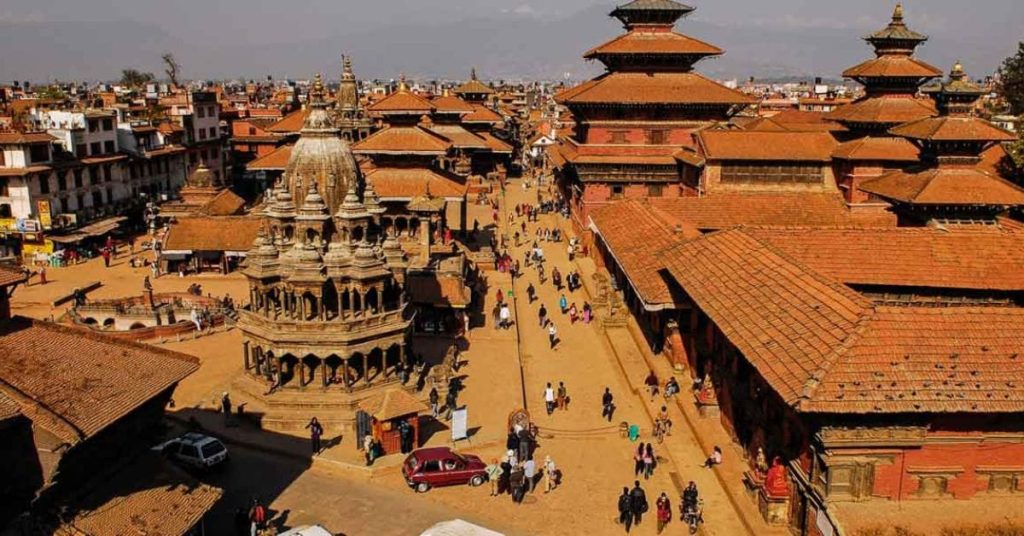
he era of the independent Malla kingdoms came to a dramatic close in 1768. King Prithvi Narayan Shah of Gorkha unified Nepal, capturing Lalitpur after its final Malla ruler, Tej Narsimha Malla, was defeated. And the new era was established
Though their political rule ended, the cultural blueprint left by the Malla kings remains the beating heart of Lalitpur. Today, their palaces and temples are recognized as a UNESCO World Heritage Site, serving as a living testament to a time when art and kingship were beautifully intertwined.